Penaeus latisulcatus
Penaeus latisulcatus
Penaeus latisulcatus
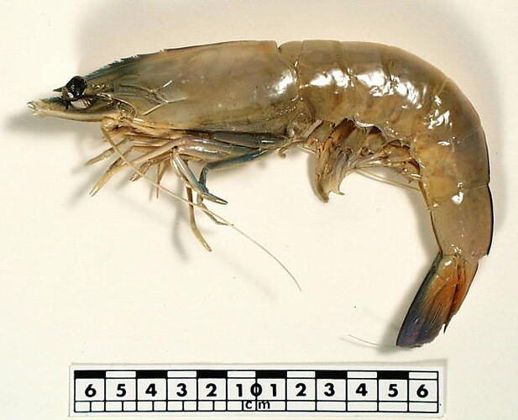
Penaeus latisulcatus (Penaeus latisulcatus) is called no recorded name in the Saudi Red Sea and no recorded name in the Arabian Gulf. Family Penaeidae. From the Saudi fish encyclopedia KSAFish via FISH ID AI.
| Scientific name | Penaeus latisulcatus |
|---|---|
| English name | |
| Family | Penaeidae |
| Local name, Red Sea | No recorded name |
| Local name, Arabian Gulf | No recorded name |
From the KSAFish encyclopedia (Arabic)
Appearance
بحسب ورقة التعريف التابعة للفاو (المحيط الهندي الغربي، 1983): الدرع أملس؛ المنقار بـ 9 إلى 12 سنًّا على حافته الظهرية وسنّ واحدة على حافته البطنية؛ العُرف الجبهي المعدي (gastrofrontal crest) موجود؛ الذنب (telson) مسلّح بثلاثة أزواج من الأشواك المتحركة؛ لا شوكة وركية على الرِّجل الصدرية الأولى. اللون: الجسم أصفر باهت إلى بني؛ الأعراف الظهرية بنية داكنة؛ على جانب كل من القطع البطنية الخمس الأولى خط عمودي قصير أحمر أو بني. وصف عام للمحيط الهندي الغربي (منطقة الفاو 51) وليس دراسة سعودية.
Appearance
According to the FAO identification sheet (western Indian Ocean, 1983): carapace smooth; rostrum with 9 to 12 teeth on the dorsal margin and a single tooth on the ventral margin; gastrofrontal crest present; telson armed with 3 pairs of movable spines; no ischial spine on the first pereopod. Colour: body pale yellow to brown; dorsal crests dark brown; the pleura of the first 5 abdominal segments each with a short vertical red or brown stripe. A description for the western Indian Ocean (FAO Area 51), not a Saudi study.
Habitat & distribution
بحسب ورقة الفاو (1983): يوجد من الساحل إلى عمق نحو 80 م وأحيانًا أعمق، على الرمل أو الطين مع تفضيل واضح للقيعان الرملية في مواضع كثيرة؛ وهو ليلي النشاط، يختبئ في القاع نهارًا ويخرج ليلًا للتغذي. وصف عام للمحيط الهندي الغربي (منطقة الفاو 51) وليس دراسة سعودية.
Habitat & distribution
According to the FAO sheet (1983): found from the coastline to depths of about 80 m, occasionally deeper, on sand or mud, with a clear preference in many localities for sandy substrates; nocturnal, burying in the seabed in daytime and emerging at night to feed. A description for the western Indian Ocean (FAO Area 51), not a Saudi study.
Distribution (Saudi Arabian Gulf)
الساحل السعودي للخليج العربي: عيّنات محفوظة في المتحف الوطني للتاريخ الطبيعي التابع لمؤسسة سميثسونيان (USNM) ومنشورة عبر GBIF، منها: Safaniya (north of Safaniya Hill) (1982)، Jurayd Island (north-east end) (1981)، Abu Ali Island (1971). تذكر سجلات GBIF الباحثة إيزابيل بيريز فارفانتي محدِّدةً لها. سجلات عيّنات متحفية، لا تقدير للوفرة ولا بيان عن وجود النوع اليوم.
Distribution (Saudi Arabian Gulf)
Saudi Arabian Gulf coast: preserved specimens held by the Smithsonian National Museum of Natural History (USNM) and published through GBIF, among them Safaniya (north of Safaniya Hill) (1982), Jurayd Island (north-east end) (1981), Abu Ali Island (1971). The GBIF records give Isabel Pérez Farfante as the determiner. Museum specimen records: not an estimate of abundance and not a statement about the species today.
Distribution
بحسب ورقة الفاو (1983): يوجد في المنطقة من جنوب شرق أفريقيا إلى خليج عُمان و«الخليج» والبحر الأحمر ومدغشقر وموريشيوس وريونيون وسيشل، وعلى الساحل الجنوبي للهند وسريلانكا؛ وشرقًا من بورما إلى كوريا واليابان وغينيا الجديدة وأستراليا وفيجي. هذا بيان إقليمي؛ والسجل السعودي للنوع في الخليج هو العيّنات المذكورة أعلاه.
Distribution
According to the FAO sheet (1983): within the area from south-east Africa to the Gulf of Oman and the “Gulf”, the Red Sea, Madagascar, Mauritius, La Réunion and Seychelles; also the southern coast of India and Sri Lanka; further east from Burma to Korea and Japan, New Guinea, Australia and Fiji. A regional statement; the Saudi Gulf record of the species is the specimens named above.
Same family
- green tiger prawn | zebra prawn green tiger prawn | zebra prawn
- speckled shrimp speckled shrimp
- Penaeus pulchricaudatus Penaeus pulchricaudatus
- Indian prawn | Indian white prawn | Indian white shrimp | white prawn Indian prawn | Indian white prawn | Indian white shrimp | white prawn
- Penaeus hathor Penaeus hathor
- Asian tiger shrimp | black tiger prawn | giant tiger prawn Asian tiger shrimp | black tiger prawn | giant tiger prawn
- Metapenaeus affinis Metapenaeus affinis
- Metapenaeus stebbingi Metapenaeus stebbingi
Source
KSAFish, the Saudi fish encyclopedia: https://ksafish.com/ar/species/penaeus-latisulcatus
Ask FISH ID AI about Penaeus latisulcatusSnap it in the FISH ID app