Indian prawn | Indian white prawn | Indian white shrimp | white prawn
Indian prawn | Indian white prawn | Indian white shrimp | white prawn
Penaeus indicus
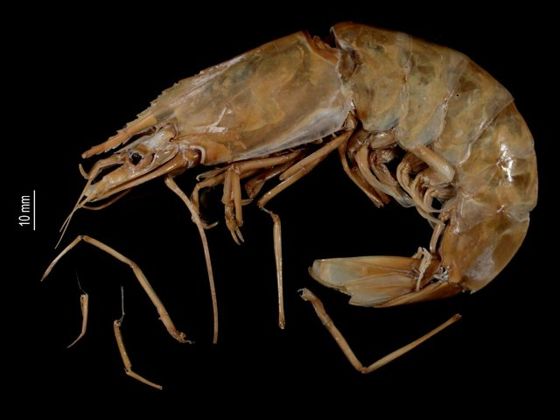
Indian prawn | Indian white prawn | Indian white shrimp | white prawn (Penaeus indicus) is called no recorded name in the Saudi Red Sea and no recorded name in the Arabian Gulf. Family Penaeidae. From the Saudi fish encyclopedia KSAFish via FISH ID AI.
| Scientific name | Penaeus indicus |
|---|---|
| English name | Indian prawn | Indian white prawn | Indian white shrimp | white prawn |
| Family | Penaeidae |
| Local name, Red Sea | No recorded name |
| Local name, Arabian Gulf | No recorded name |
From the KSAFish encyclopedia (Arabic)
Appearance
بحسب ورقة التعريف التابعة للفاو (المحيط الهندي الغربي، 1983): الدرع بلا شعر؛ المنقار نحيل وطويل بـ 7 إلى 9 أسنان على حافته الظهرية و4 إلى 6 على حافته البطنية؛ لا عُرف جبهي معدي ولا عُرف كبدي. اللون: الجسم وردي باهت إلى مصفرّ، شبه شفاف، مع نقط زيتونية خضراء إلى رمادية مزرقّة؛ والعُرفان المنقاري والظهري الأوسط للبطن بنيان في الغالب. وصف عام للمحيط الهندي الغربي (منطقة الفاو 51) وليس دراسة سعودية.
Appearance
According to the FAO identification sheet (western Indian Ocean, 1983): carapace hairless; rostrum slender and long, with 7 to 9 teeth on the dorsal margin and 4 to 6 on the ventral margin; gastrofrontal and hepatic crests absent. Colour: body pale pink to yellowish, semi-translucent, with olive-green to grey-blue speckles; rostral and middorsal abdominal crests mostly brown. A description for the western Indian Ocean (FAO Area 51), not a Saudi study.
Habitat & distribution
بحسب ورقة الفاو (1983): يعيش في مناطق الجرف من الساحل إلى عمق نحو 90 م، وهو أوفر في المياه الضحلة الأقل من 30 م على الرمل أو الطين (مع ميل طفيف إلى القيعان الرملية)؛ وهو شديد التحمّل لتغيّر الملوحة، إذ يتحمل في البحر الأحمر ملوحة تزيد على 45 (رمز وحدتها غير مقروء في نسخة المصدر المقروءة)؛ ويُصاد نهارًا وليلًا. وصف عام للمحيط الهندي الغربي (منطقة الفاو 51) وليس دراسة سعودية.
Habitat & distribution
According to the FAO sheet (1983): lives on shelf areas from the coast to about 90 m, most abundant in shallow water of less than 30 m on sand or mud (a slight preference for sandy bottoms); very euryhaline, tolerating salinities of more than 45 in the Red Sea (the unit symbol is illegible in the source copy read); caught by day as well as at night. A description for the western Indian Ocean (FAO Area 51), not a Saudi study.
Distribution (Saudi Red Sea)
Species composition of the survey catch: Penaeus indicus 2,860 individuals, 3% by number of 103,758.
Distribution
بحسب ورقة الفاو (1983): يوجد في المنطقة من سواحل أفريقيا الجنوبية والشرقية إلى الهند وسريلانكا، بما في ذلك مدغشقر والبحر الأحمر، لكنه «ربما يكون غائبًا أو نادرًا جدًا في خليج عُمان و«الخليج»». هذا بيان إقليمي، ولا يُنسب إلى النوع نطاق في ساحل الخليج السعودي.
Distribution
According to the FAO sheet (1983): within the area from the south and east African coast to India and Sri Lanka, including Madagascar and the Red Sea, but “possibly absent or very rare in the Gulf of Oman and the Gulf”. A regional statement; no range on the Saudi Gulf coast is attributed to the species.
Same family
- green tiger prawn | zebra prawn green tiger prawn | zebra prawn
- speckled shrimp speckled shrimp
- Penaeus pulchricaudatus Penaeus pulchricaudatus
- Penaeus hathor Penaeus hathor
- Asian tiger shrimp | black tiger prawn | giant tiger prawn Asian tiger shrimp | black tiger prawn | giant tiger prawn
- Metapenaeus affinis Metapenaeus affinis
- Metapenaeus stebbingi Metapenaeus stebbingi
- Penaeus latisulcatus Penaeus latisulcatus
Source
KSAFish, the Saudi fish encyclopedia: https://ksafish.com/ar/species/penaeus-indicus
Ask FISH ID AI about Indian prawn | Indian white prawn | Indian white shrimp | white prawnSnap it in the FISH ID app